Project Info
- Sector Aerospace, Defense & Government
- Cargo Sikorsky UH-60M Black Hawk & Boeing AH-6i Little Bird Helicopters
- Origin United States
- Destination Southeast Asia
- Transport Modes Ferry Flight, Heavy-Haul Highway Transport, Breakbulk Heavy Lift Vessel, Container Vessel (Flat Racks)
- Scope of Work Airfield clearance, wharfside teardown, blade packing, surface protection, crane loading, ocean freight
Precision Transport of Military Helicopters
LOGIN FMS Logistics, a member of the RoliProjects group (Rohde & Liesenfeld), has delivered specialized multi-modal logistics for U.S. Government Foreign Military Sales programs, defense contractors, and international partners. Moving sensitive defense assets requires exact technical compliance, intermodal coordination, and operational flexibility. Recent operations moved Sikorsky UH-60M Black Hawks and Boeing AH-6i Little Birds from U.S. locations to Southeast Asia.
Both missions required tailored multi-modal transport strategies, turning commercial docks and secondary airfields into specialized staging areas to ensure safe delivery to international allied forces.
Background
LOGIN FMS Logistics has provided turnkey solutions for sensitive, high-value, and out-of-gauge cargo since 2003, with a primary focus on defense and Foreign Military Sales programs. Moving military helicopters differs from standard freight because the aircraft are high-value aviation assets that require precise disassembly, specialized handling equipment, and full compliance with ITAR and related defense trade controls.
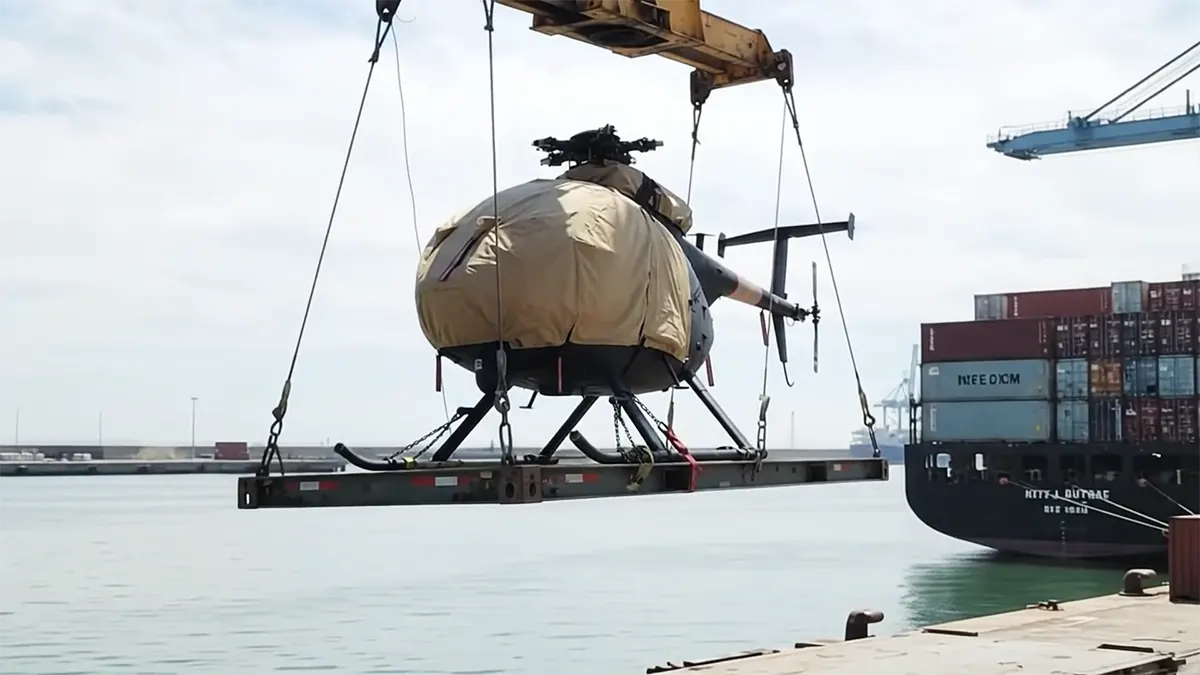
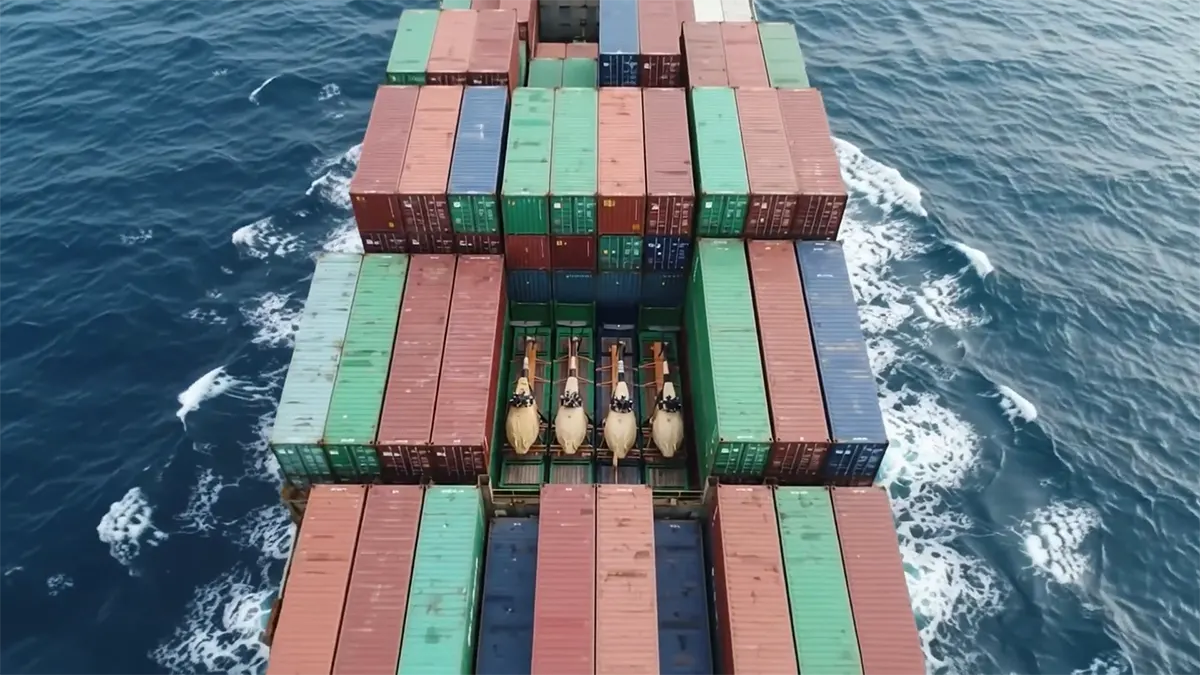
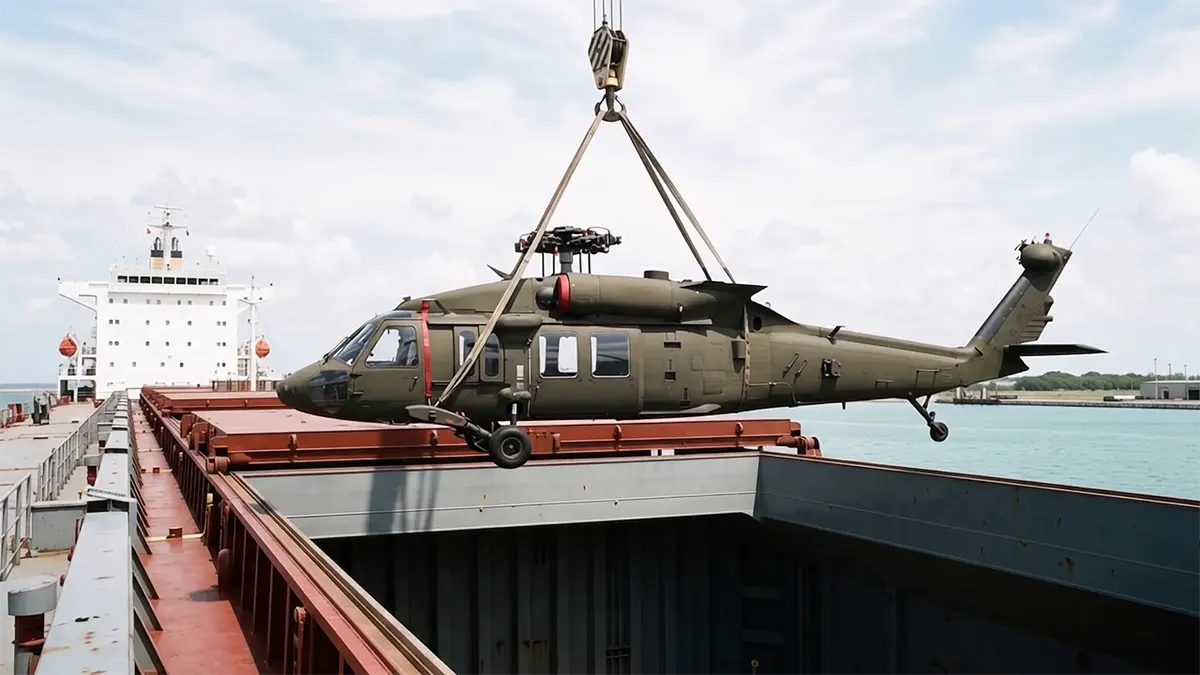
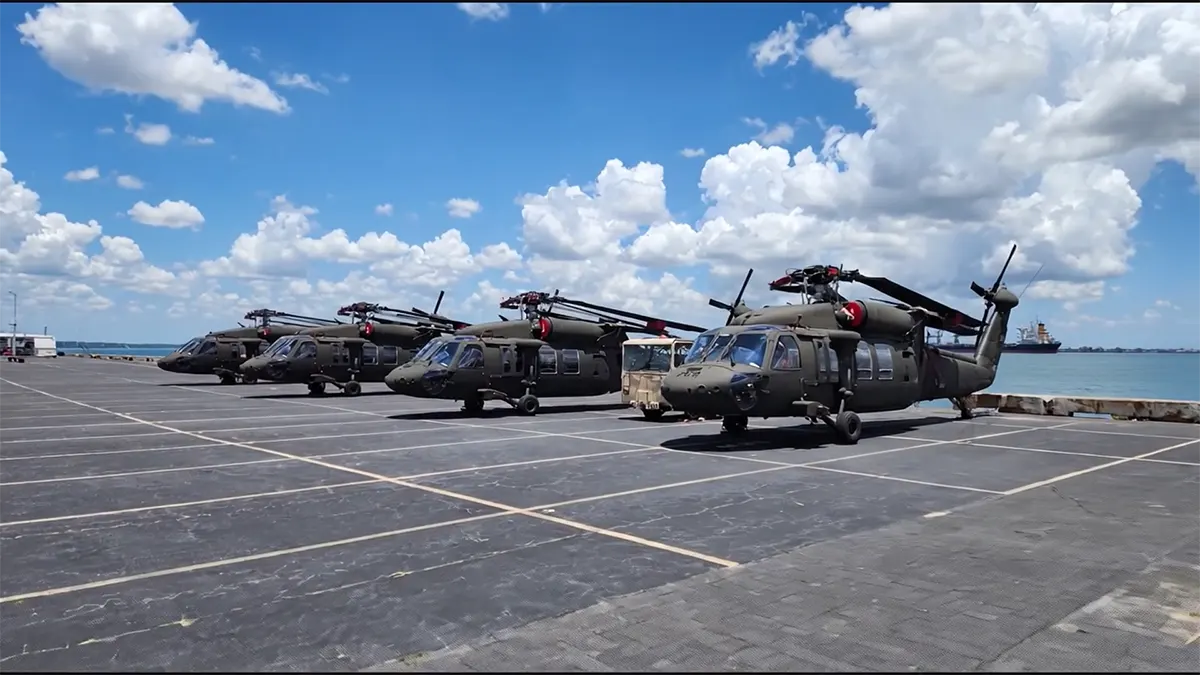
For the Black Hawk movements, government pilots flew the UH-60M aircraft from West Palm Beach to Fort Hood and then to the Port of Houston. At the wharf, crews removed and packed the blades, folded the tail rudders, and loaded the helicopters directly into the hold of a large lift vessel. For the AH-6i Little Birds, Boeing test pilots flew eight aircraft from Phoenix. Port of Los Angeles restrictions prevented landings inside the port perimeter, so the helicopters landed at Woodley Airfield a few miles away. From there they moved on specialized trailers to the loading area, were prepared (blades removed, windows and engine intakes covered), stowed on flat racks, and transferred to a container vessel.
The Challenges
Military helicopter shipments involve regulatory limits on airfield and port access, the physical constraints of out-of-gauge aircraft, the need to protect high-value components during multi-modal transit, and the coordination of government, contractor, and carrier parties across air, ground, and ocean legs. Each step must maintain chain-of-custody and ITAR compliance while meeting vessel loading windows.
Key Logistical Hurdles
- Securing approved landing and staging locations when ports restrict helicopter operations inside their perimeters.
- Performing controlled disassembly (blade removal, tail folding, protective covering) without damaging airframes or sensitive systems.
- Coordinating specialized ground equipment (trailers, flat racks) and vessel stowage for both heavy-lift and container ships.
- Aligning government pilot schedules, contractor technical teams, port authorities, and ocean carriers under FMS and ITAR requirements.
The Solution
LOGIN FMS Logistics designed and executed the full transport plans. This included arranging pilot ferry flights to the correct staging fields, deploying ground teams and specialized trailers, managing blade packing and protective measures, and coordinating loading onto the appropriate vessels. For the Black Hawks, the process ended with direct loading into a heavy-lift vessel at Houston. For the Little Birds, the team used Woodley Airfield as the landing site, moved the aircraft by trailer to the terminal, and completed stowage on flat racks for the container vessel.
The approach kept the aircraft under controlled handling from the moment the pilots landed through ocean departure. Real-time coordination with all parties and on-site oversight ensured the preparations met both technical and regulatory standards. These operations continue the company’s long-standing work supporting FMS deliveries of high-value military aviation assets.
Moving a military helicopter is not like moving ordinary freight. LOGIN FMS Logistics applies the same disciplined, multi-modal project approach used on other complex defense and aerospace shipments to deliver these assets ready for their end users.